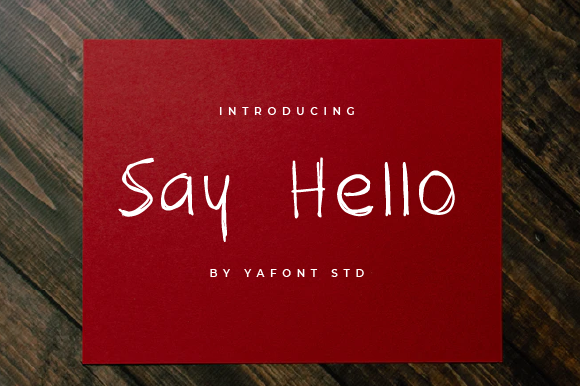
Introducing Say Hello: A Charming Handwritten Font
Say Hello is a delightful, natural, and cute handwritten font that brings a touch of whimsy and warmth to any digital project. As a web designer, I've found it to be an excellent choice for creating engaging and approachable designs, especially for children's content or school-related projects.
The Visual Appeal of Say Hello
Say Hello has a down-to-earth, readable quality that makes it perfect for a variety of digital applications. Its handwritten style adds a personal and friendly touch, making it ideal for creating a welcoming and relatable brand identity. The font's clean lines and legible characters ensure that it remains easy to read, even in smaller sizes or on mobile screens.
Using Say Hello in Web Design
When it comes to web design, Say Hello can be a versatile and effective tool for enhancing the visual hierarchy and overall aesthetic of a site. Here are some practical ways to incorporate this font into your digital projects:
- Website Headers and Hero Sections: Use Say Hello for the main title or tagline in your website header or hero section to create an immediate, inviting impression. This works particularly well for creative portfolios, boutique online stores, and coaching websites.
- Landing Pages and Call-to-Action Areas: Incorporate Say Hello for short, impactful phrases or calls to action. Its friendly and approachable style can help increase user engagement and conversions.
- Online Shop Banners and Product Descriptions: Add a personal touch to your online store by using Say Hello for product names, special offers, or promotional banners. This can make your shop feel more unique and memorable.
- Blog Graphics and Social Media Posts: Use Say Hello for blog headers, social media graphics, and other digital marketing materials. Its handwritten style can add a creative and authentic feel to your content.
Readability and User Experience
One of the key strengths of Say Hello is its readability. While it has a handwritten, casual style, it maintains clarity and legibility, which is crucial for a positive user experience. Here are some tips to ensure optimal readability:
- Mobile Screens: Test Say Hello on various mobile devices to ensure it remains clear and legible. Adjust the font size and line spacing as needed to maintain readability.
- Responsive Layouts: Use responsive typography techniques to ensure that Say Hello scales appropriately across different screen sizes and devices.
- Dark and Light Backgrounds: Experiment with different background colors to find the best contrast for Say Hello. It often works well on both light and dark backgrounds, but always test to ensure readability.
- Image Overlays: When using Say Hello over images, consider adding a subtle text shadow or a semi-transparent background to enhance visibility.
Font Pairing and Brand Identity
To create a balanced and professional look, it's important to pair Say Hello with complementary fonts. Here are some effective combinations:
- With Sans Serif Fonts: Pair Say Hello with a clean, simple sans serif font for body text. This combination creates a modern and approachable look, ideal for blogs, landing pages, and educational content.
- With Serif Fonts: For a more editorial and sophisticated feel, use a serif font for body text. This pairing can work well for more formal or traditional branding, such as for a course sales page or a professional portfolio.
- With Other Script Fonts: If you want to add more decorative elements, consider using another script font for accents or secondary headings. However, be cautious not to overuse script fonts, as they can sometimes reduce readability.
Practical Considerations
Before using Say Hello in your projects, here are a few practical considerations to keep in mind:
- Included Styles and File Formats: Check the available styles and file formats (e.g., TTF, OTF, WOFF) to ensure compatibility with your design tools and platforms.
- Webfont Availability: Verify that the font includes webfont versions (WOFF, WOFF2) for seamless integration into your website.
- Alternates and Weights: Explore the included alternates and weights to add variety and personality to your designs. This can be particularly useful for creating dynamic and engaging layouts.
- Multilingual Support: If your project requires support for multiple languages, check the font's multilingual capabilities to ensure it covers the necessary character sets.
Commercial Licensing
When using Say Hello for commercial projects, such as client websites, online stores, or digital templates, it's essential to review the licensing terms. Ensure that you have the appropriate license for the intended use, whether it's for a single project, multiple clients, or resale as part of a design asset.
By carefully considering these factors, you can effectively integrate Say Hello into your web design projects, creating a visually appealing and engaging user experience that aligns with your brand's personality and goals.